Profiles in Character: Al Gore Concedes Defeat in the 2000 Presidential Election
Representatives and Senators walked into the House chamber for the official certification of presidential electoral votes on January 7, 2001, a ceremony mandated by the Constitution. The presiding officer, also mandated by the Constitution, was the sitting Vice-President. On this date, it was Al Gore, who had only three weeks before officially lost in the most contentious presidential election in over a hundred years.
At 8:00 pm on Election Day, November 7, 2000 all major television networks declared Al Gore the winner of Florida’s 25 electoral votes, putting him over the 270 needed to win the presidency. Just two hours later, with more votes in, they retracted and declared the state “undecided.” By 2:30 am, George W. Bush had a lead of over 100,000 votes, and the networks declared him the winner - only to retract that call when just two hours later his lead had shrunk to under 2,000 votes. Gore, who had called Bush to concede, retracted his concession. A five-week period of uncertainty and court cases began.
By November 8, a machine recount was ordered under state law and Bush’s lead shrank to about 300 votes. Gore then requested, again under state law, a hand recount in four counties. At issue were votes on paper ballots when voters had to punch out a chad for their chosen candidate. Florida’s Secretary of State Katherine Harris set a statutory deadline for the recount of November 14. She did not inspire confidence among Democrats as she was co-chair of Bush’s Florida campaign. The Florida Supreme Court extended the deadline to November 26.
On November 26 the state canvassing board declared Bush the winner by 537 votes. Gore then requested a recount of 70,000 votes, which the Florida Supreme Court ordered on December 8. The next day Justice Antonin Scalia of the U.S. Supreme Court, speaking for a five justice majority halted it, stating that “the counting of votes that are of questionable legality does in my view threaten irreparable harm to petitioner [Bush]. Oral arguments were scheduled for December 11. On December 12, in a 5-4 decision, the Supreme Court permanently halted the recount, basing the majority opinion on the Equal Protection Clause of the Constitution with the rationale that the four counties could not guarantee use of the exact same process in all contested counties. The case was remanded back to the Florida Supreme Court. With only hours remaining until the state’s mandatory deadline, the previous decision awarding the 25 electoral votes to Bush went into effect, giving him a national total of 271 and thus the presidency.
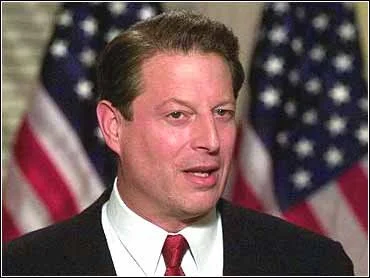
Gore certainly had reasons to attack the Court’s decision and carry his campaign for victory in Florida to the people and the press, but he did neither. Speaking to the nation on December 13, after he had just congratulated Bush, he said:
“Almost a century and a half ago, Sen. Stephen Douglas told Abraham Lincoln, who had just defeated him for the presidency, “Partisan feeling must yield to patriotism. I’m with you, Mr. President, and God bless you.” Well, in that same spirit, I say to President-elect Bush that what remains of partisan rancor must now be put aside, and may God bless his stewardship of this country.”
“Over the library of one of our great law schools is inscribed the motto, ‘Not under man but under God and law.” . . . Now the U.S. Supreme Court has spoken. Let there be no doubt, while I strongly disagree with the court’s decision, I accept it. I accept the finality of this outcome . . . And tonight, for the sake of our unity as a people and the strength of our democracy, I offer my concession.”
The pro forma exercise on January 7 did not go entirely smoothly. About a dozen members of the Congressional Black Caucus and a few others tried to block the counting of the Florida electoral vote. The contested votes were in heavily minority counties. The legal path to do so required a member of both the House and Senate to object to a state’s electoral vote count, triggering a wider debate. No Senator would do so and thus Gore gaveled down the first objection, in the end doing so some twenty times. Despite what had to be excruciating for him, Gore nevertheless managed a sense of humor. When out of frustration at his failed attempts Florida Democrat Representative Alcee Hastings blurted out to Gore, “We did all we could,” the smiling Gore replied “The chair thanks the gentleman from Florida.”
The peaceful transition of power that had marked every presidential election since George Washington handed the presidency to John Adams after the election of 1796 thus continued as a hallmark of American democracy. The fact that Gore won the national popular vote by nearly 550,000 votes and the possibility that a completed Florida recount might also have given him the presidency in the end mattered less to Al Gore than honoring the Constitution and the rule of law and American democracy.
“May God bless our new president and new vice president and may God bless the United States of America,” Gore said, and gaveled the joint session of Congress to a close.
Photo Credit: CBS News