Is Online Health Information Healthy?
What’s the healthiest time of day to eat breakfast? A recent online post reported on a study of 31,000 adults who were followed for nine years. The study revealed that those who lived longest ate breakfast between 7 and 8 am, not before and not after. That’s just a tiny taste of the massive amount of health information the Internet offers. Is such advice sound? That requires careful thought.
There are hundreds of professionally edited health-related sites and thousands of others less edited that dispense tips on disease, nutrition, fitness, mental health, supplements and more. Online health information comes from individuals too. A 2025 study of Facebook users found 70% had posted health-related content in the previous year.
There is an appetite for such online information. A 2025 Kaiser Family Foundation (KFF) study found 58.5% of U.S. adults used the Internet to seek health information in the past year. A 2025 Pew Research study reported that 36% of Americans sometimes get health information from social media, 22% get it from AI chatbots and about half of those under 50 get it from influencers or podcasts. Many get exposed to health information without even seeking it. The KFF study reported that 72% of Americans using social media had encountered information about weight loss, diet or nutrition during the preceding month.
Online information from objective, carefully researched health resources offers ways to maintain a healthy lifestyle, such as with advice on exercise, nutrition, sleep and recommended screenings. This puts an essential focus on disease prevention. Good online health information also can reduce anxiety for some and serve as a useful first step when researching a health issue and/or engaging with medical professionals.
Not all online health information is risk-free. Some lacks scientific rigor, may be designed to misinform, stoke health-related conspiracies or even sell unproven tests/treatments. Surveys reveal skepticism among some users about what they find online. The Pew study found 50% say it’s at least somewhat difficult to determine whether such health information is accurate and 54% say it’s at least somewhat difficult to know what to trust when they encounter conflicting health information. Among people who get health information from social media, only 7% say it is extremely or very accurate, while 47% say it is not too or not at all accurate.
Another caution arises from the sheer volume of online health information. For example, someone trying to navigate across even a half-dozen of the 150,000 sites on dementia can easily become exhausted, face varied and conflicting recommendations and may suffer what psychologists call choice anxiety. A related phenomenon is information bias, the belief that more information will always lead to a better decision. More is not necessarily better and endless searching itself can heighten unhealthy stress.
Some who search online can become fearful they have a disease that they do not. Called cyberchondria, they may suffer increased anxiety and health professionals may find it hard to reassure them when they show up with their Internet diagnosis in hand.
With the ubiquitous presence of online information about what and what not to eat, when and how much, some users obsess about eating perfectly, a psychological issue called orthorexia nervosa. This can lead to “healthism,”- the feeling that if you don’t do everything right regarding your health and get a health problem that it’s your fault.
Algorithms hidden in search engines add another caution. They are designed to use online search choices to feed new information that pleases users – and keeps them online (where they encounter targeted ads). So if you search on “the healthy diet” you are bound to see food ads pop up for the next several days even when you’re on unrelated web sites. Confirmation bias is also a danger as algorithms sensing what users think provide new information to support rather than question it.
Using the Internet thoughtfully regarding health information can avoid its dangers. Here are a few suggestions:
· Verify before you trust: check the credibility of the information. Is it based on science? From a source without a commercial or political axe to grind? Caveat Emptor (buyer beware)!
· Anecdotes are not science: a social influencer who testifies to wonderful gains from her health regimen offers an attractive story, but is just a sample of one. That’s not science.
· Train the algorithm: since your search engine aims to please you can retrain it to avoid its one-sided results. Use search queries that take different stands on a health question so that it draws from more diverse sources and views.
· Unfollow: unfollow social media influencers who keep giving you hyped health information and unsubscribe from sites flooding you with information you don’t want to see.
· AI is not a physician: don’t rely on AI chatbots to diagnose your health issue and prescribe a cure. It lacks access to the full range of scientific information your doctor can get. Its offerings may be a starting point but be wary of ending there, especially with symptoms that are complex or confusing.
· Satisfice: economist Herbert Simon coined the phrase “satisficing” to counter the human desire called “maximizing.” In short, when applied to online health information this suggests the goal should be to stop searching when you’ve gained enough for a good decision because if you try for a perfect one, there may be no end to your searching. This has been captured as “the perfect can be the enemy of the good.”
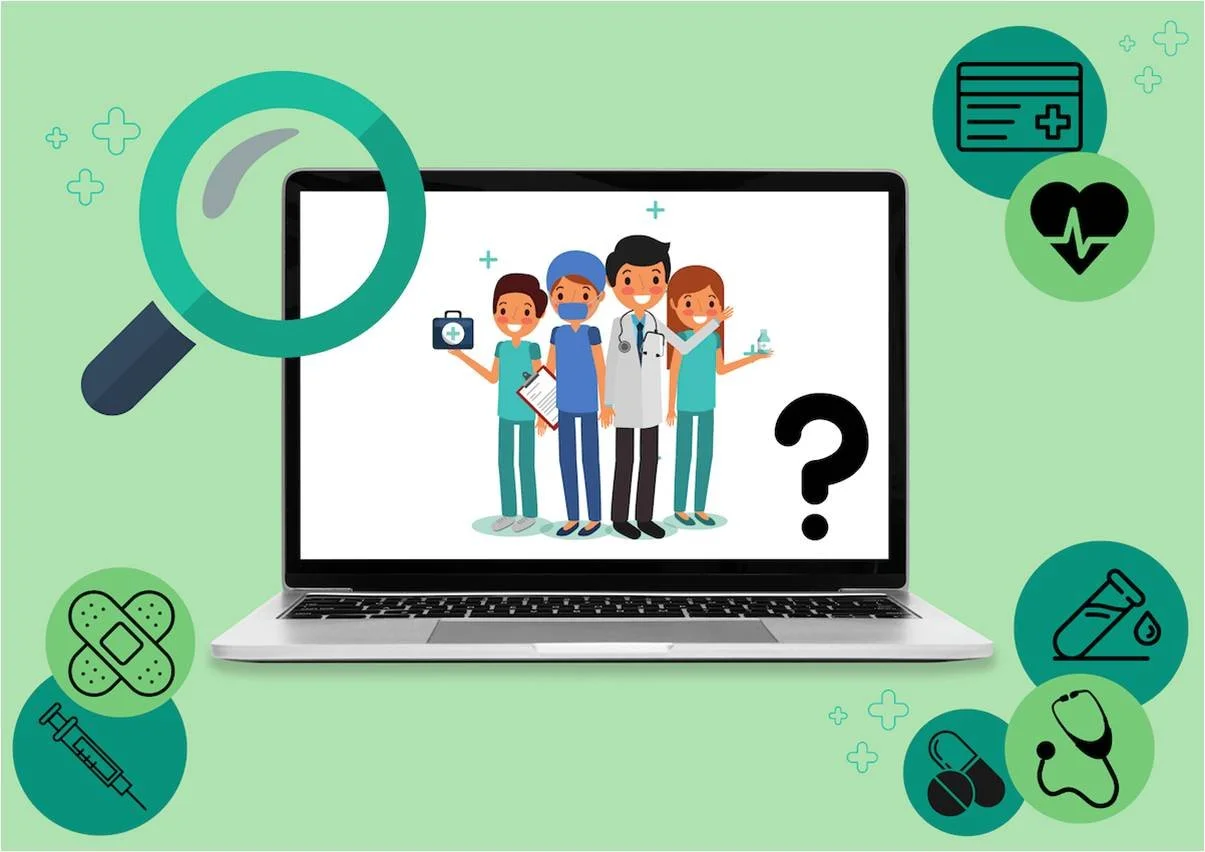
Photo Credit: guavaheallth.com