Where are America's Statesmen?
“A politician is interested in the next election; a statesman is concerned about the next generation,” President Gerald Ford said in his autobiography. Government leaders are failing to act to meet Ford’s test of statesmanship. Three of those failures make the case: an unsustainable national debt, a Social Security system soon unable to meet its obligations and human-induced climate change. (The figures below that highlight these failures come from the current federal government.)
Massive Debt
The national debt recently topped $40 trillion, up from less than $1 trillion in 1980. It has quadrupled in the last 18 years. Interest on the debt is approaching $1 trillion a year, 14% of the entire federal budget. That is projected to more than double by 2036. At $1 trillion this year we’re paying holders of America’s debt close to the total cost of Medicare ($1.1 trillion). On a personal level, for a typical American one of every seven dollars paid in taxes goes to pay interest on the debt, limiting the funds needed for more useful public purposes.
Social Security:
By 2034, if no changes are made, the trust fund for Social Security will be able to pay only 83% of promised benefits. Using the median Social Security monthly payment for 2026 of $2,050, that would reduce to $1,702, a loss of $348/month or $4,176 a year. About 8 million people who rely on Social Security for 90 percent of their income will face this dramatic loss at the time of their lives where they most counted on the commitment made when they paid Social Security taxes during their working years.
Climate Warming:
Global temperature was about 1.1 degree Celsius warmer from 2011-2020 compared with 1850-1900, and the rate of current warming has not been seen in the past 10,000 years. Most of this rise is due to human activity. Eleven of the warmest years on record were from 2015-2025. Ninety-one percent of the Earth’s excess heat is stored in the oceans. Warmer water expands, melts glaciers and alters ocean currents. NOAA estimates the average U.S. coastline will experience about 10–12 inches of sea-level rise between 2020 and 2050. High-tide flooding is now more frequent along portions of the Southeast Atlantic and Gulf Coasts. If climate warming cannot yet be conclusively cited as the cause of a given weather disaster, it has scientifically been linked to excessive rainfall, flooding and property damage in some storms. Americans are already being faced with higher home insurance costs and, in some areas, cannot afford insurance or face insurers abandoning the market.
These three threats can be addressed if the Congress and Executive Branch act in unison. For decades, with only minor and mostly short-lived attempts, they have not. The absence of solutions is not the problem. The absence of will, courage and steadfastness across Administrations is.
Politicians cite many reasons for inaction. Depending on what is proposed, they have cited: lack of public support, resistance to new taxes and regulations, the power of entrenched interests, distrust of government competence, an unwillingness of the public to sacrifice and the fear of elected leaders that action will cost them campaign funds and the next election.
During the crafting of the Constitution in 1787 these same reasons existed. Many Americans did not want a stronger national government and distrusted its intentions and competence. Having fought England over taxation they feared it would come from a new and distant federal government. States feared it would rob them of their sovereignty. Existing elected members of the Confederation Congress worried about losing power and their offices when it was replaced by the Constitution. Yet Washington, Adams, Hamilton, Franklin and Madison, among others, took on the challenge of statesmanship and campaigned for the new charter. The Continental Congress, which had instructed the Constitutional Convention to only amend the existing Articles of Confederation, sent the more radical Constitution to the states for ratification anyway.
Those who object to a specific measure to address the debt, Social Security and climate warming remind us that, channeling the Declaration of Independence, the measure lacks “consent of the governed.” The framers of the Constitution were steeped in this principle and so required that it be ratified not by state legislatures but by a convention of the people in each state. These conventions were preceded by and conducted with intense, heated campaigns by proponents and adversaries. Newspapers, pamphlets and extended arguments such as the Federalist Papers were written to explain the Constitution’s provisions and sway debate. The outcome was not simply ratification but the understanding that a bill of rights would be added to address many of the major concerns of opponents. Political leaders saw it as their obligation to learn from the people but also to educate them. Educating citizens to move them toward understanding, compromise, approval and temperance of some of their strong passions is statesmanship.
We need such statesmanship today. In 1776 the founders pledged “our Lives, our Fortunes and our sacred Honor” to birth a free nation and bestow the promise of that freedom on future generations. Leaders today need risk neither their lives nor their fortunes – just their seats in the next election. To do less dishonors themselves, the founders, our future and the future of unborn millions.
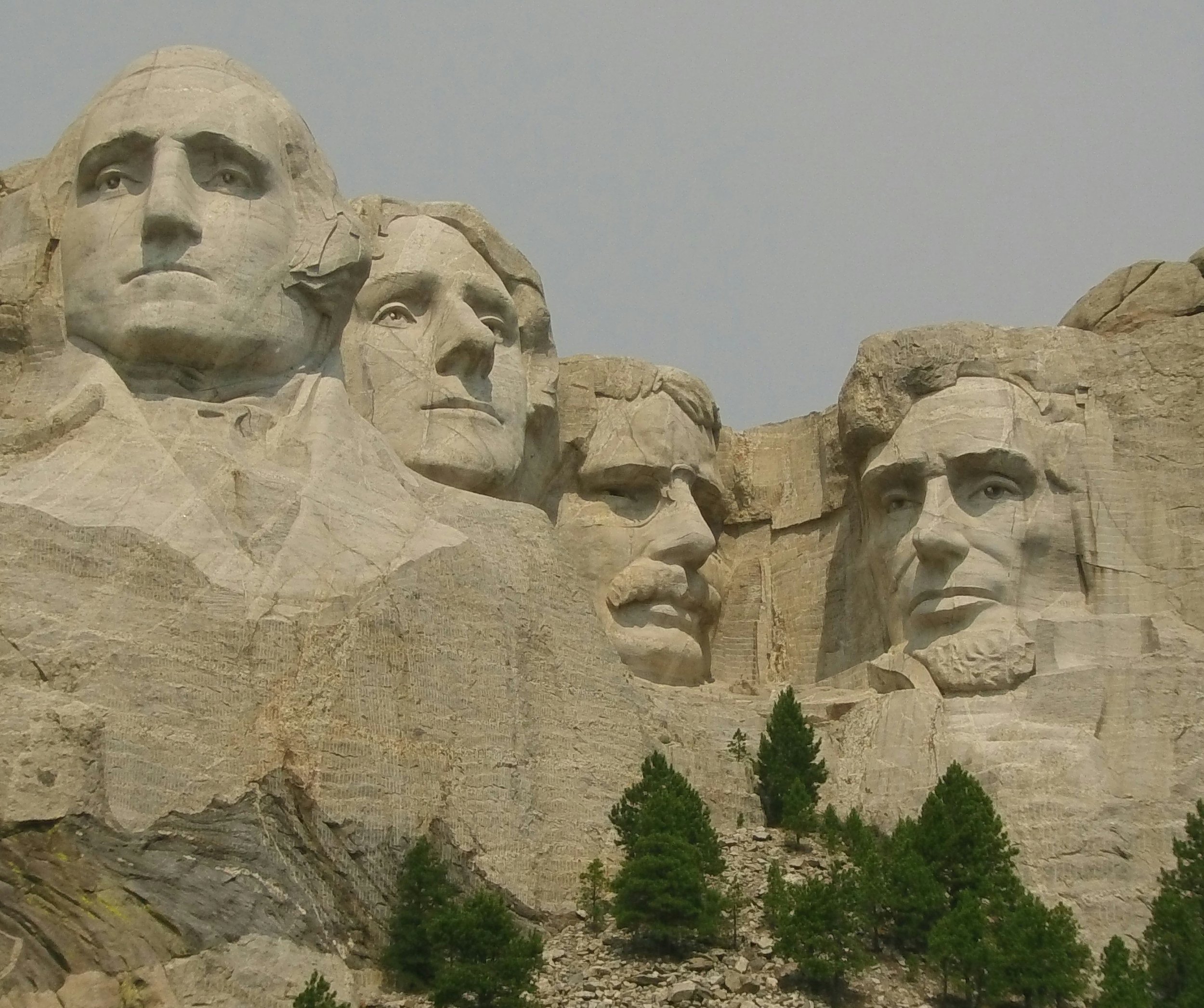
Photo Credit: Darren Miller - unsplash.com