
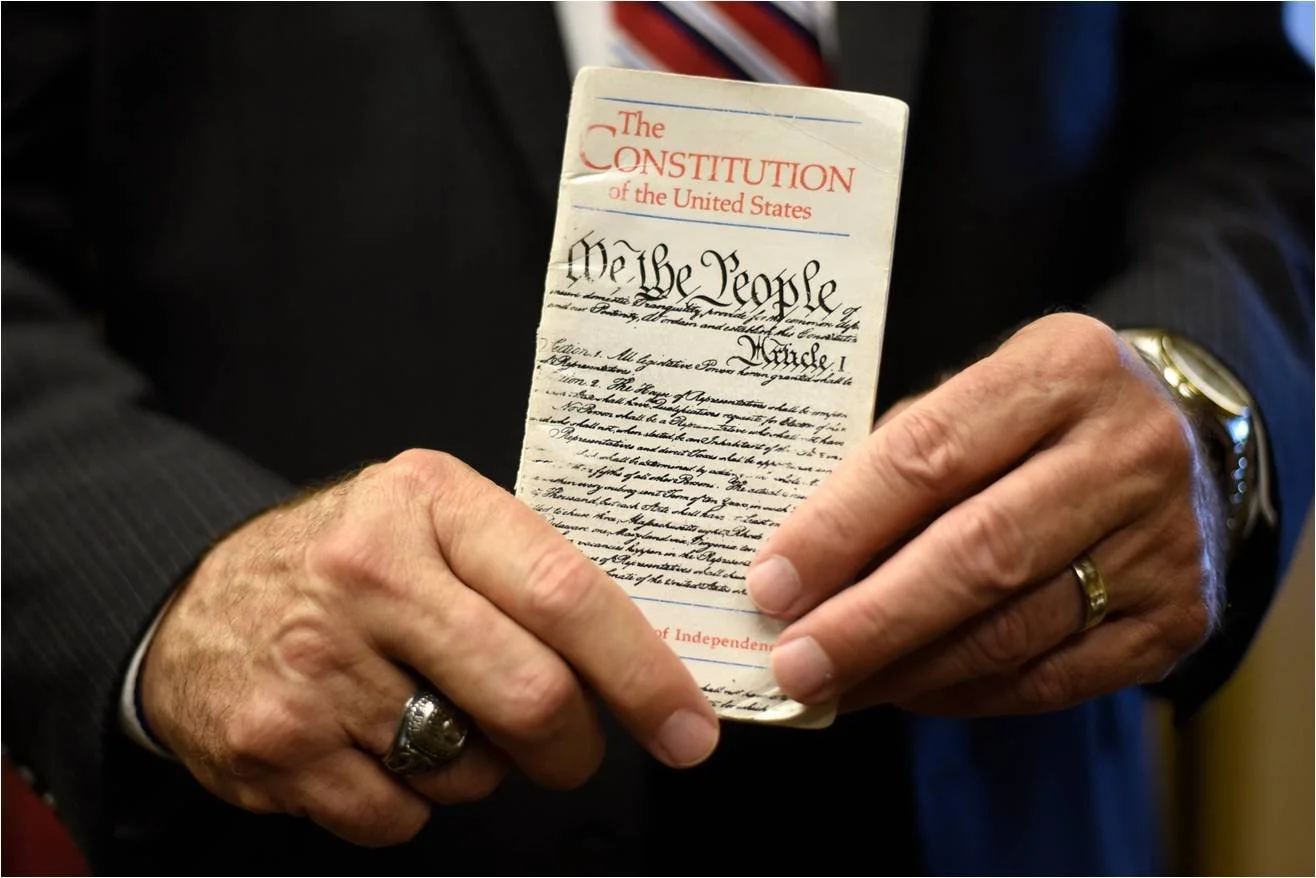
Understanding the Constitution #26: Amending the Constitution is Necessary but Difficult
The Equal Rights Amendment (ERA) to bar discrimination against women was first proposed in 1923. A version did not clear Congress until 1972, whereupon it went to the states for ratification with a Congressional deadline for approval of 1979, later extended to 1982. By that date 35 of the required 36 states had ratified it – one short. In a 2020 Pew Research poll, 78 percent of all adults favor adding the ERA to the Constitution. It has not yet been ratified. Is amending the Constitution meant to be so difficult?
On June 8, 1789, in the nation’s First Congress, Representative James Madison (Virginia) rose to propose amendments to the new Constitution. He had opposed the need for amendments before but changed his mind. Opposition to the proposed Constitution was intense and most state ratifying conventions voted to accept it only with the understanding that amendments would come soon after it took effect. Madison’s proposed amendments sought to help bind opponents to the new charter. After modification by the Senate and ratification in 1791, the first ten amendments became what we now call the Bill of Rights. The first ten amendments took just two years.
The idea of amending constitutions was not new in the States. As Jill LePore notes in her expansive history of the Constitution (We, the People) the “Constitution was itself an act of amendment” aimed at correcting the faults of the Articles of Confederation. The framers of the Constitution understood that they were establishing only “a more Perfect union,” not a perfect one. Article V set out the process for amending it. Proposed amendments could come from a vote of two-thirds of each house of Congress or from a national convention when called by the legislatures of two-thirds of the states. Ratification of an amendment by three-forth of the states would then be required.
Since 1789 about 12,000 amendments have been proposed in Congress. Yet after 1791 only17 have been ratified, punctuated by long stretches with no amendments. There were none between 1804 and 1865 (61 years), between 1870 and 1913 (43 years) and since 1971 (54 years).
A national convention under Article V has never been called. By 1967, 32 states had called for one (34 were needed), but the total now stands at 19 since states can rescind their calls or set a time limit to them.
The barriers to amendment are steep. Article V gives equal weight to every state since each has two senators. Since two-thirds of the Senate must approve a proposed amendment, it gives great power to less-populous states to stop one. Supreme Court Justice Antonin Scalia once commented that “if you picked the smallest number necessary for a majority in the least populous states, something like less than 2 percent of the population can prevent a constitutional amendment.”
Calling for a Constitutional convention amidst today’s polarized politics means both major parties are wary of an open convention. When Scalia was asked in 2014 what one amendment he’d like to see, he said he’d make it easier to amend the Constitution. Yet he added a stern caveat: “I certainly would not want a Constitutional Convention. I mean whoa, who knows what would come out of that.”
Amendment requires a broad national consensus, which helps explain why there have been so few. Amendments 1-10 reflected agreement among both proponents and opponents of the Constitution. The 13th, 14th and 15th ended slavery and expanded citizenship rights to freemen reflecting national agreement from at least the states of the victorious North. Five amendments expanded democracy by establishing the direct election of senators (17th), granting the franchise to women (19th) and anyone reaching 18 years old (26th), giving electoral votes to the District of Columbia (23rd) and abolishing the poll tax (24th). Three amendments focused on presidential elections (12th), terms of office (22nd) and presidential succession (25th). Two, of course, reflected consensus on both prohibition (18th) and rescinding it (21st).
When consensus can’t be achieved, can the Constitution still keep the republic healthy? Today, amendments seem unlikely even when broad support exists. Support exists for abolishing the Electoral College to eliminate electing a president who lost the popular vote (which has happened five times). Support also exists for an amendment to address the need for campaign finance reform. Yet, as LePore’s analysis shows, over 2,100 amendments were proposed in Congress between 1980-2020 and none passed both Houses by the required two-thirds vote.
If elected representatives of the people cannot advance amendments, addressing challenges to our democracy often falls to the unelected national judiciary. Yet court decisions lack an amendment’s permanency, subject to being overturned by future justices or legislation. Writing to Henry Tompkinson from Monticello in 1816, Thomas Jefferson reflected on both amendments to constitutions and the need for them. His thoughts are worth revisiting:
“Some men look at Constitutions with sanctimonious reverence & deem them, like the ark of the covenant, too sacred to be touched. They ascribe to the men of the preceding age a wisdom more than human, and suppose what they did beyond amendment . . . I am certainly not an advocate for frequent & untried changes to laws and constitutions . . . but I know also that laws and institutions must go hand in hand with the progress of the human mind . . . we might as well require a man to wear still the coat which fitted him as a boy, as civilized society to remain ever under the regimen of their barbarous ancestors.”
Photo Credit: ar.inspiredpencil.com
(If you do not currently subscribe to thinkanew.org and wish to receive future ad-free posts, send an email with the word SUBSCRIBE to responsibleleadr@gmail.com)